
Let's connect!
Co-matters app MVP
Client
Intellera Consulting
Year
2023
Areas
Wireframing and prototyping, UI and animation design, Usability tests, UX research, Design systems
Background
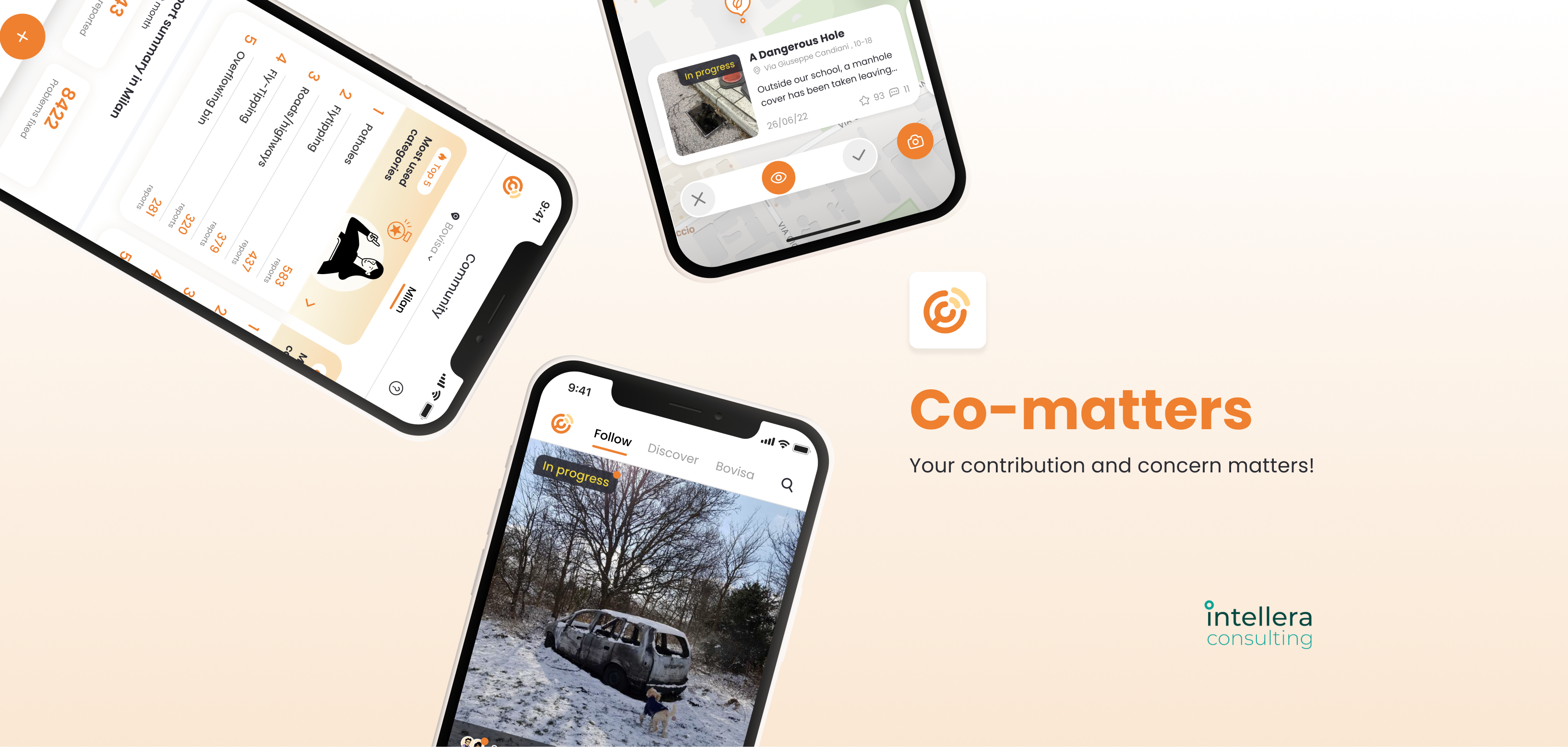
This project was conducted in collaboration with Intellera Consulting, based on a real-world challenge provided to our university lab. The objective was to design a citizen engagement platform that allows residents to report environmental issues and request timely interventions within their cities or neighborhoods.
The MVP was designed with Milan as the initial pilot city, with scalability in mind for future expansion to other urban areas.
Project Goals
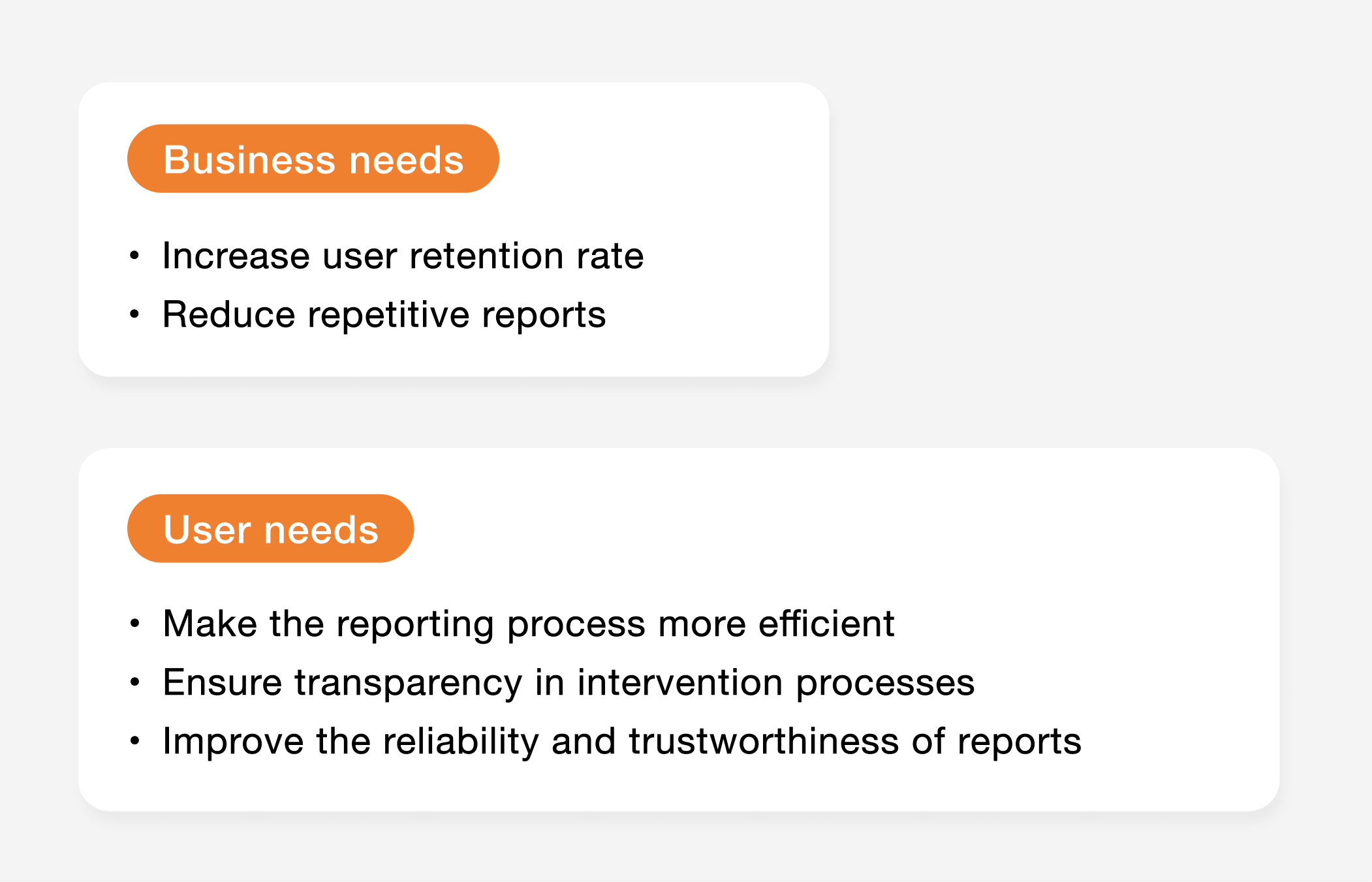
Our design needed to balance both business and user needs to ensure the platform’s sustainability and adoption.
Solution
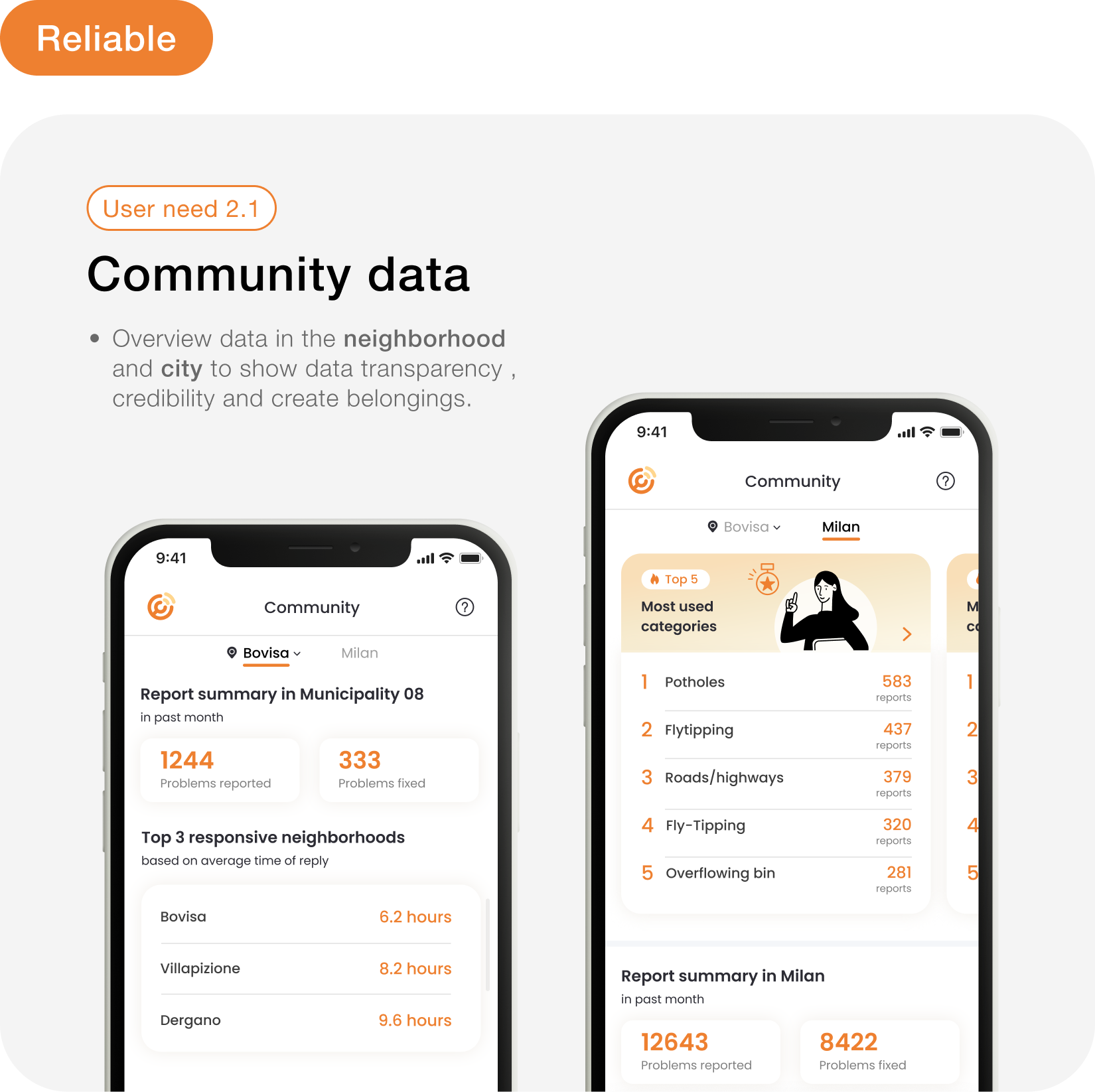
A civic engagement platform that enables Milan residents to report local issues efficiently, receive transparent updates, and foster public trust through real-time data and community accountability — while driving long-term engagement through tailored report feeds and meaningful social incentives.
how might we
design a civic engagement platform that simplifies reporting, builds trust through transparency, and encourages long-term user participation?
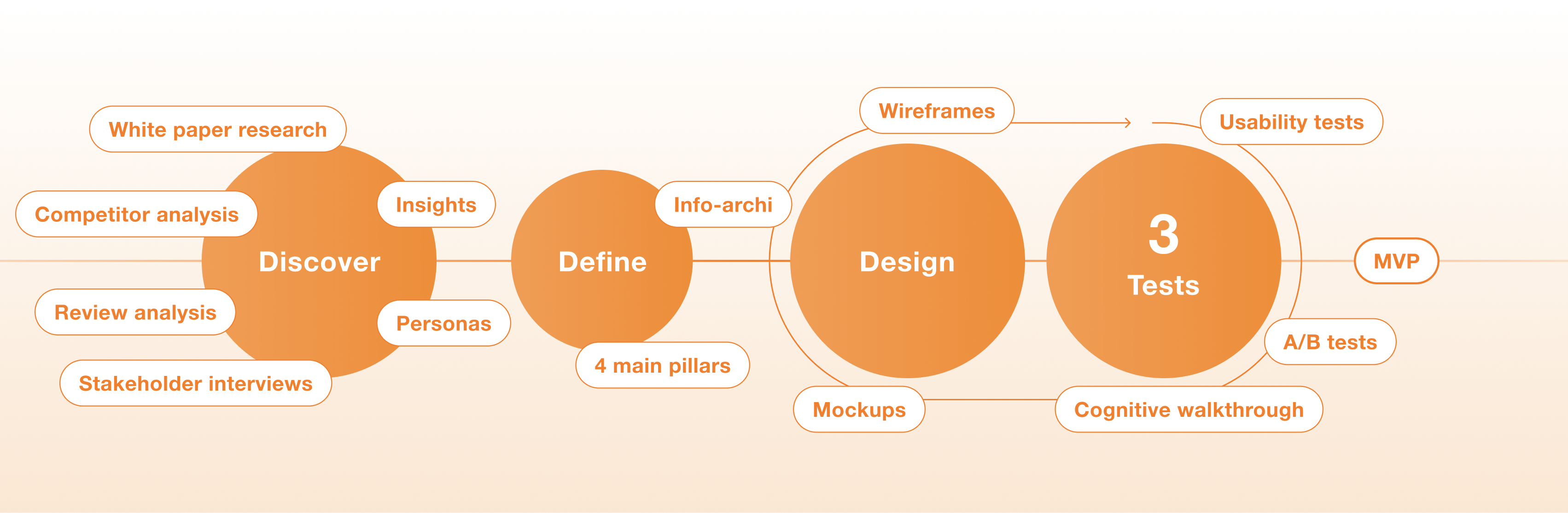
Process Overview
01. Research & The Problem
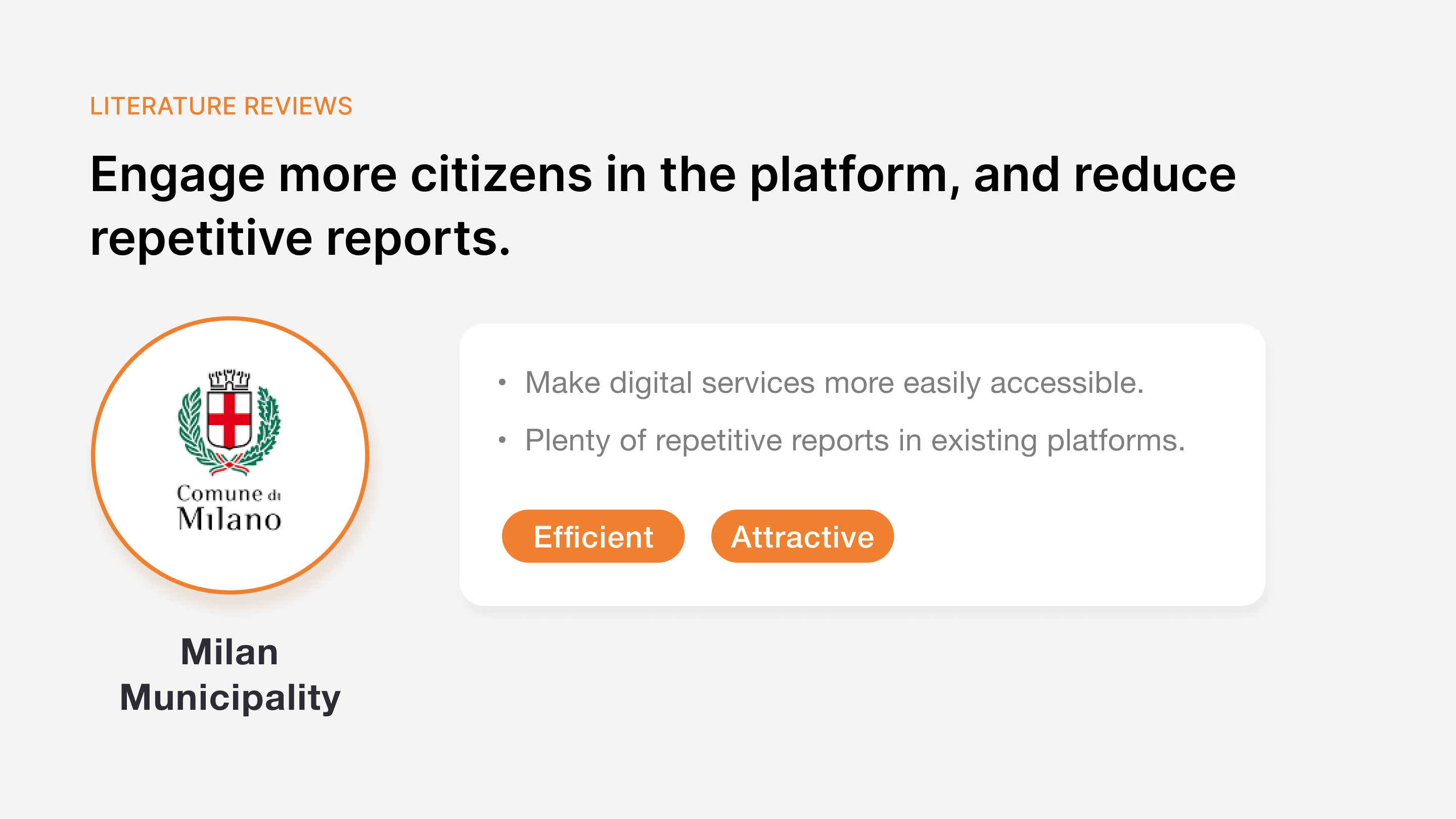
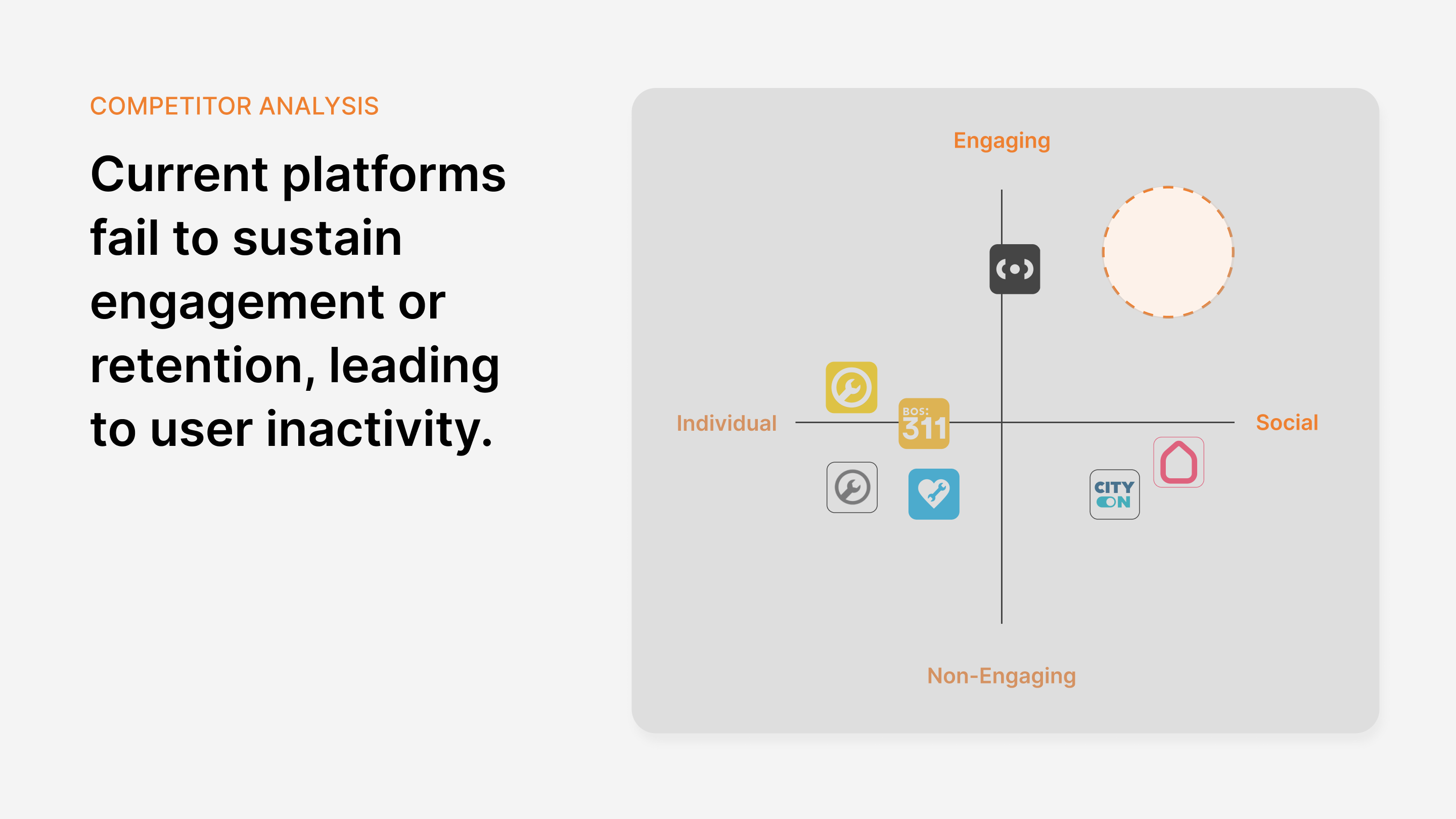
The Milan Municipality needs to boost citizen engagement and reduce duplicate reports on its civic platform. However, existing platforms fail to combine engagement with retention, often resulting in stagnant user activity.
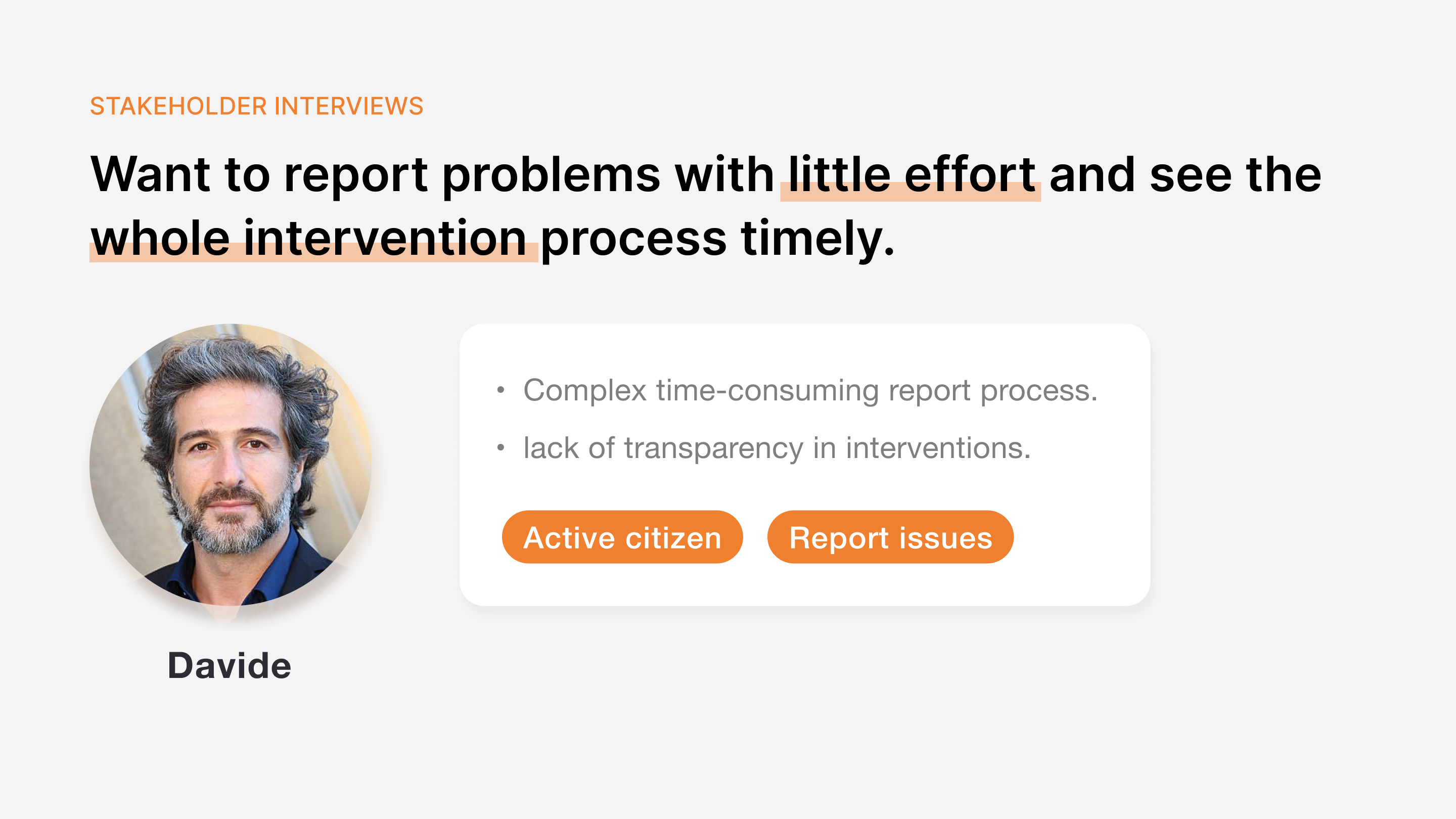
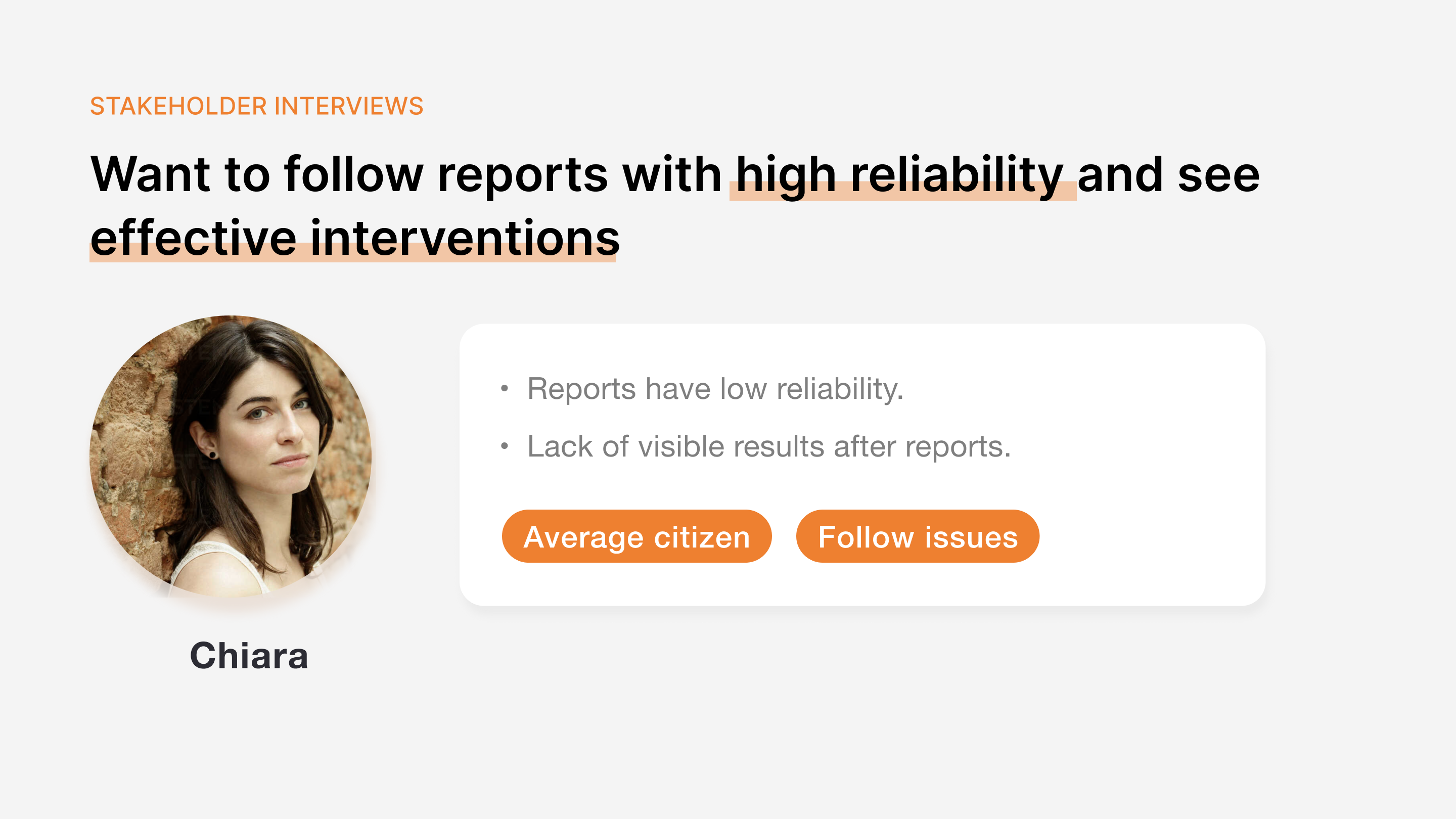
Active users face a complex reporting process and a lack of transparency in interventions, while average users are discouraged by unreliable reports and unclear impact after reports.
02. Design
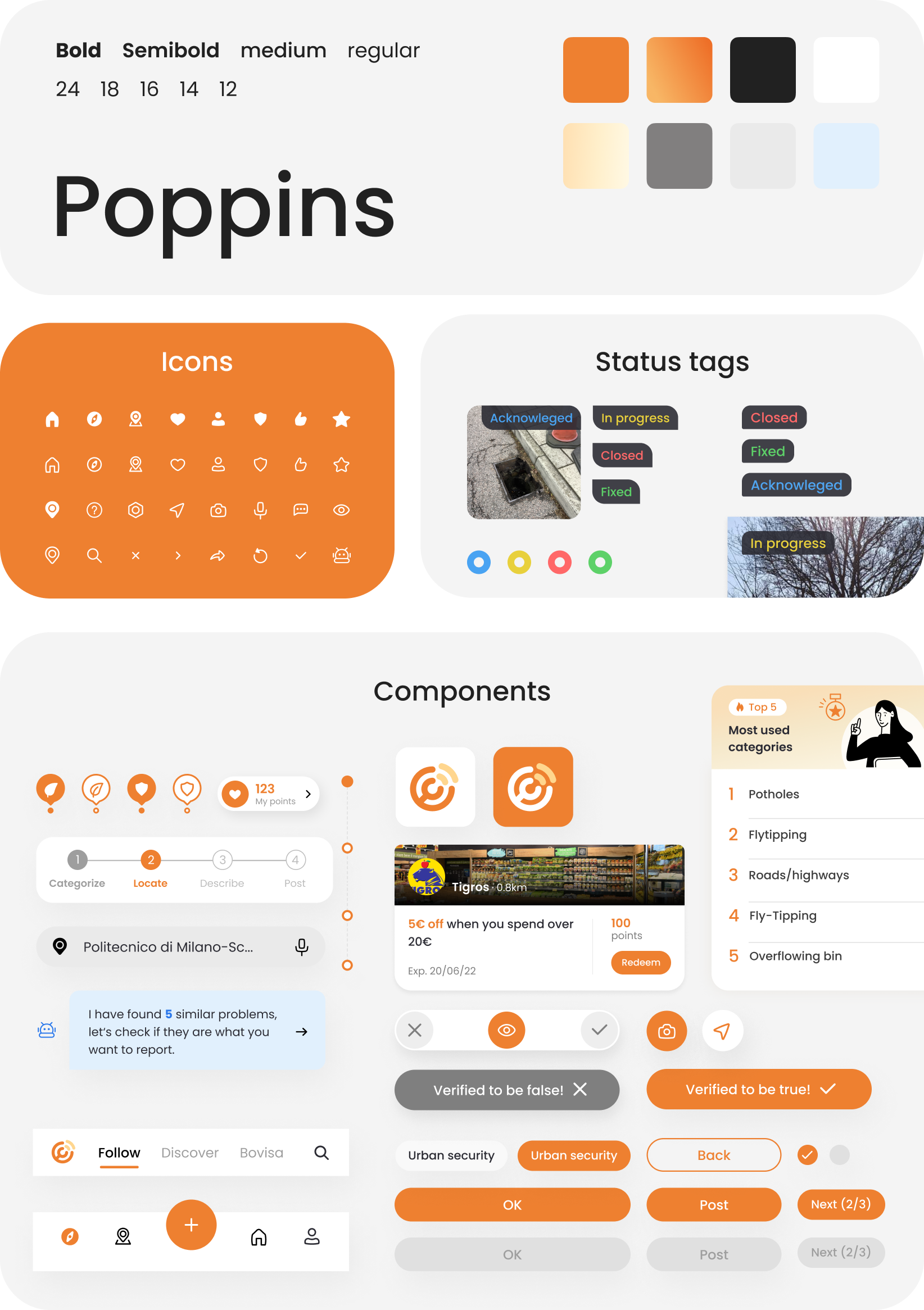
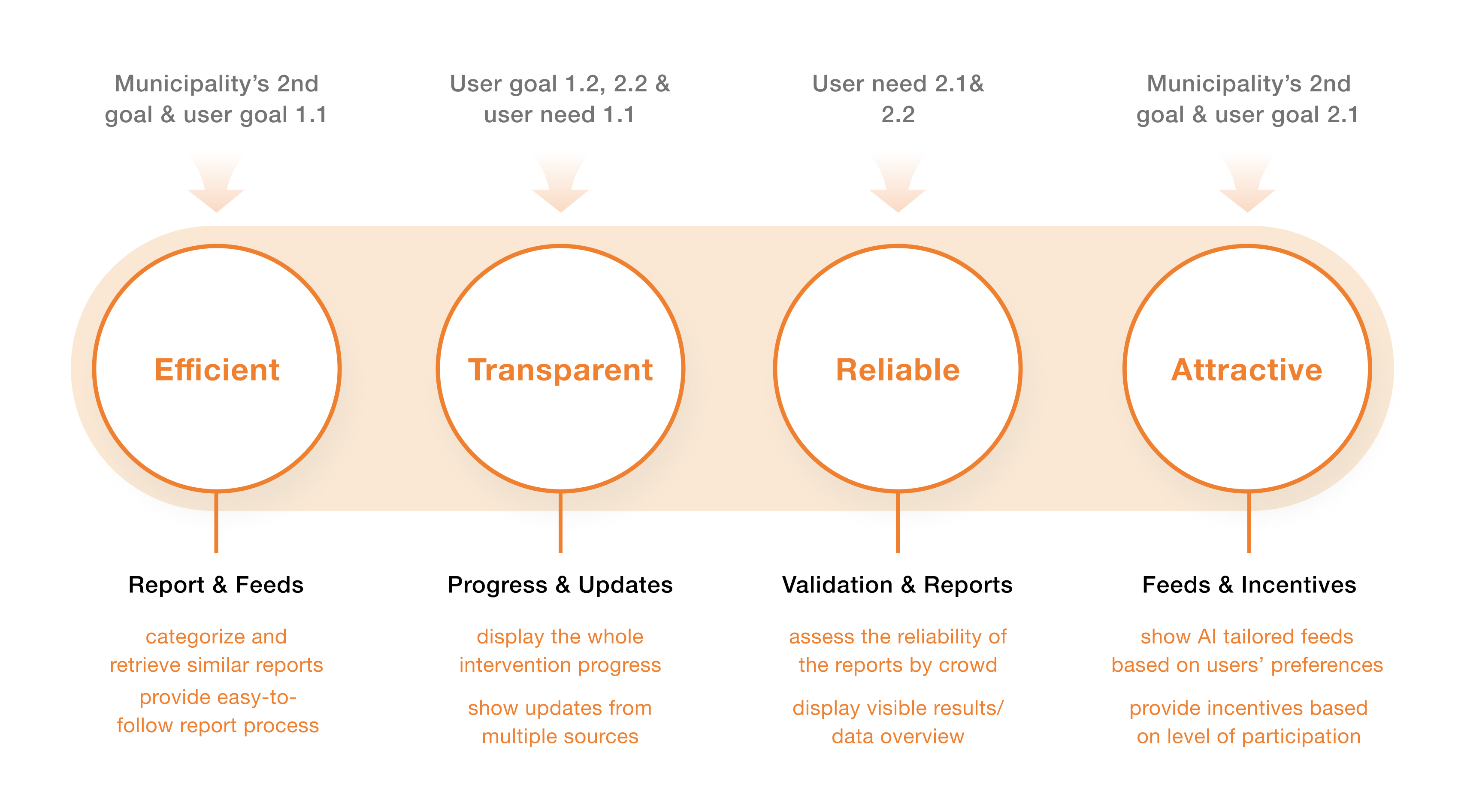
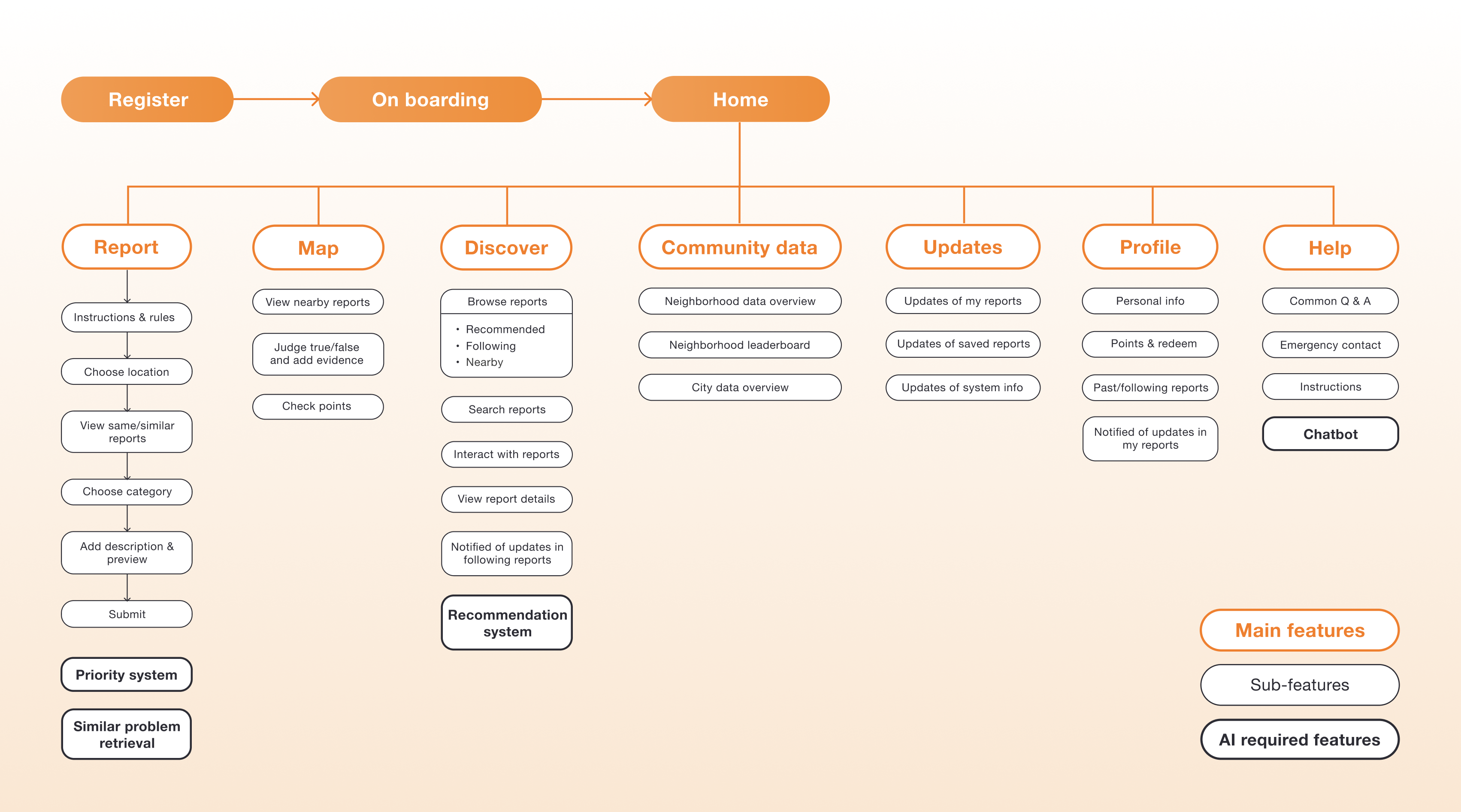
Building on the key insights from our research, we identified four core design pillars aligned with stakeholder goals and defined the information architecture, highlighting the features that leverage AI technologies.
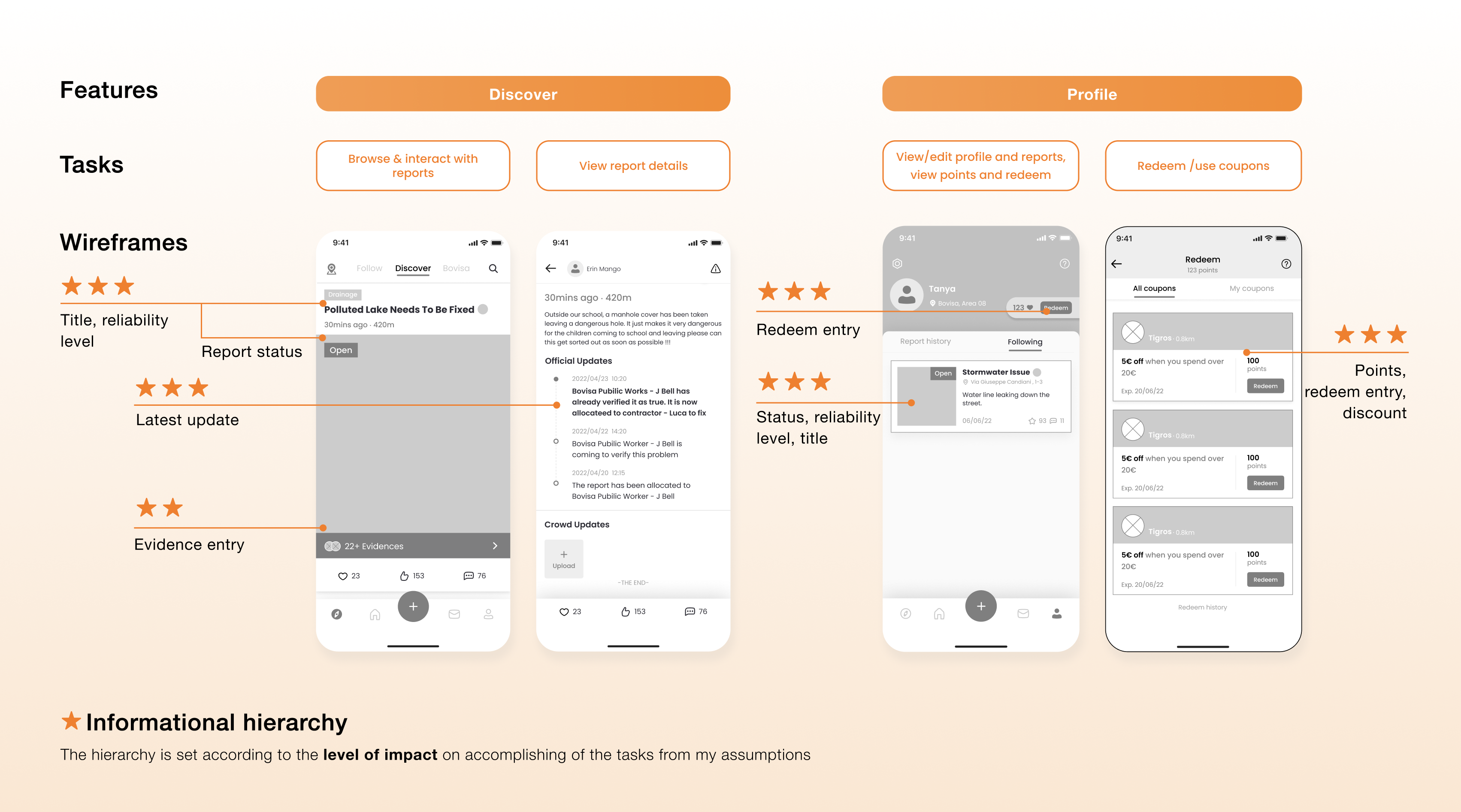
Using high-level features as the foundation, I mapped out key user stories for each functionality, broke them down into actionable tasks, and structured wireframes accordingly—ensuring each section followed a clear and logical information hierarchy.
03. 3 Rounds of Tests
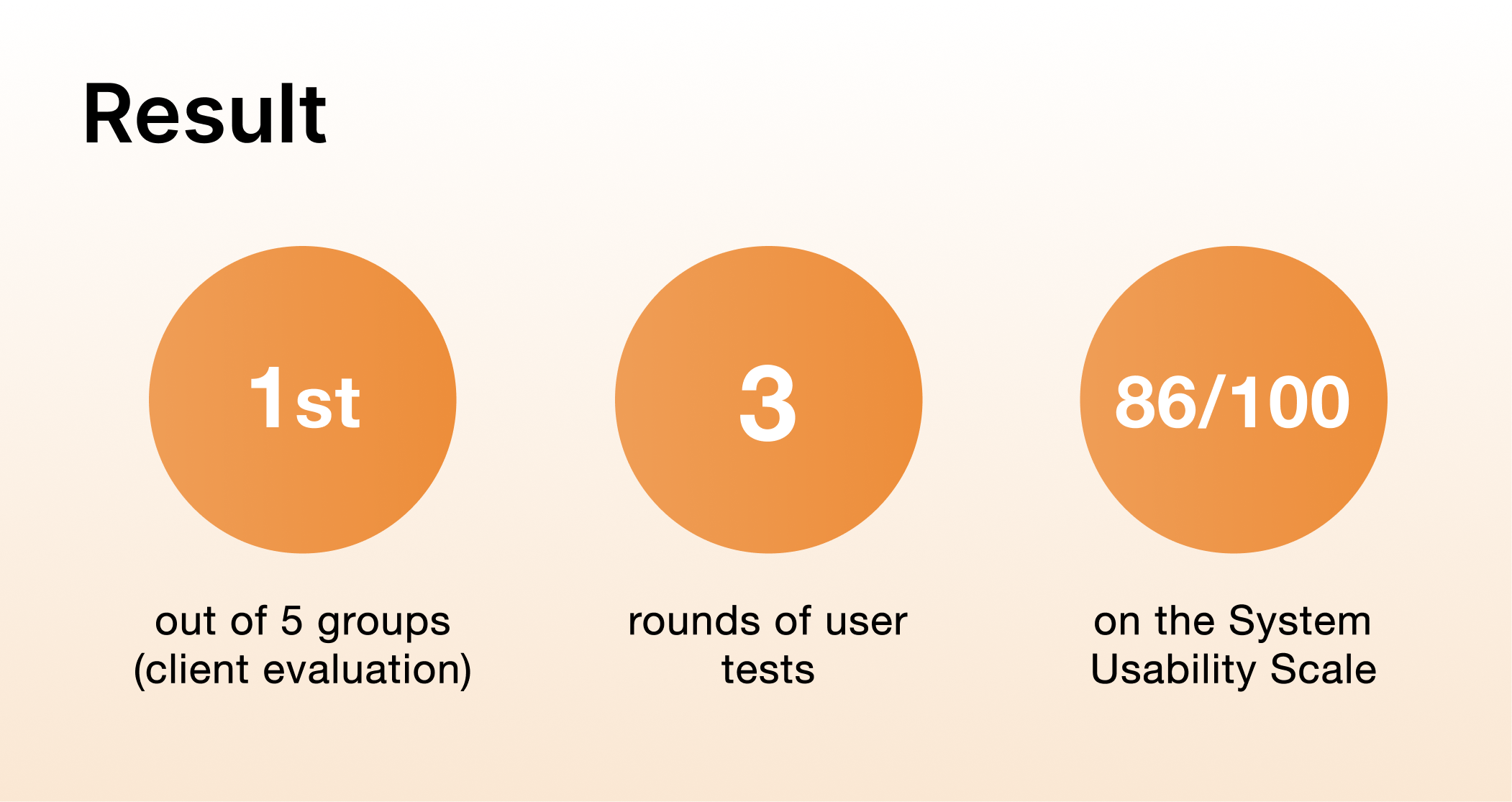
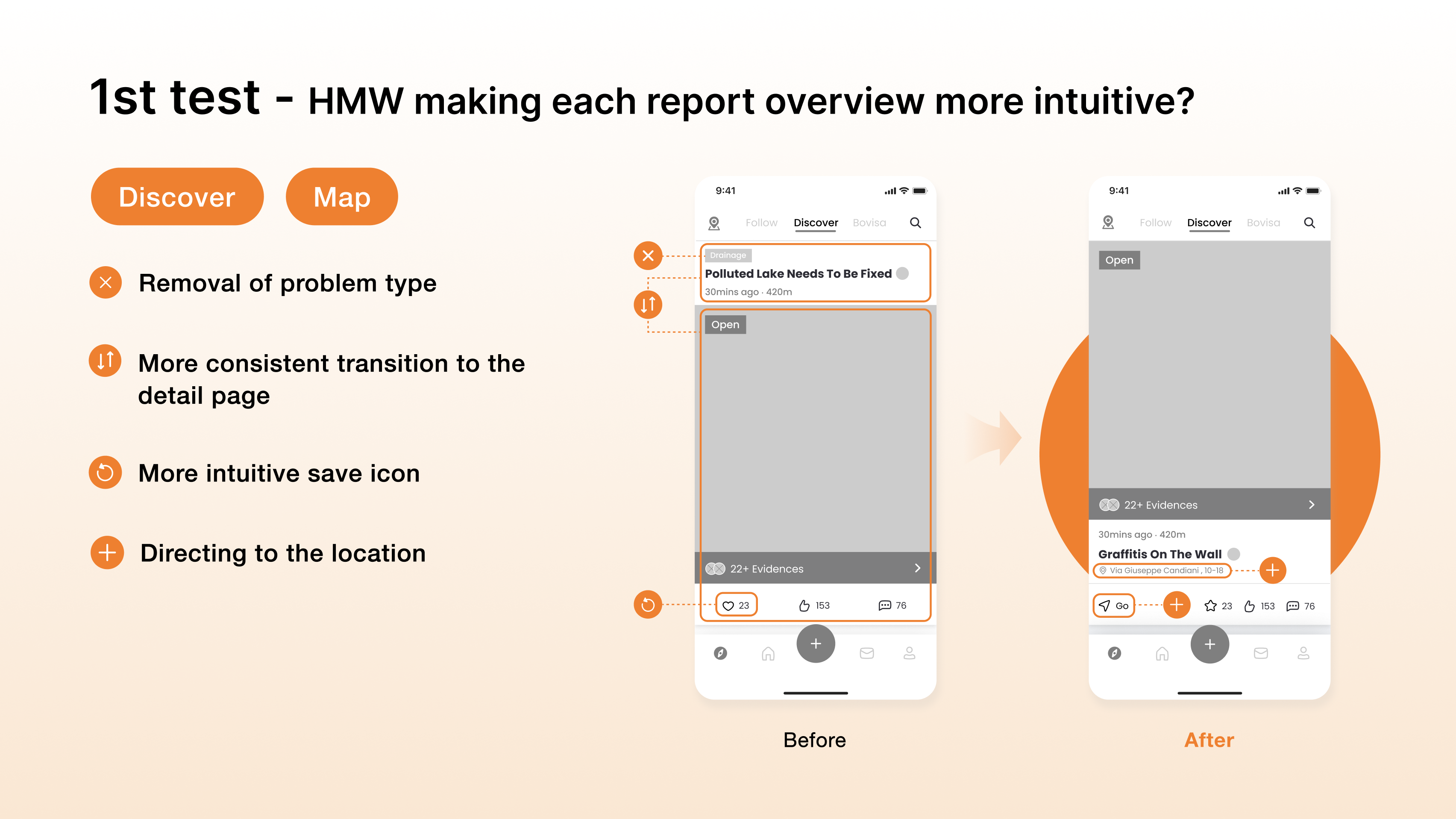
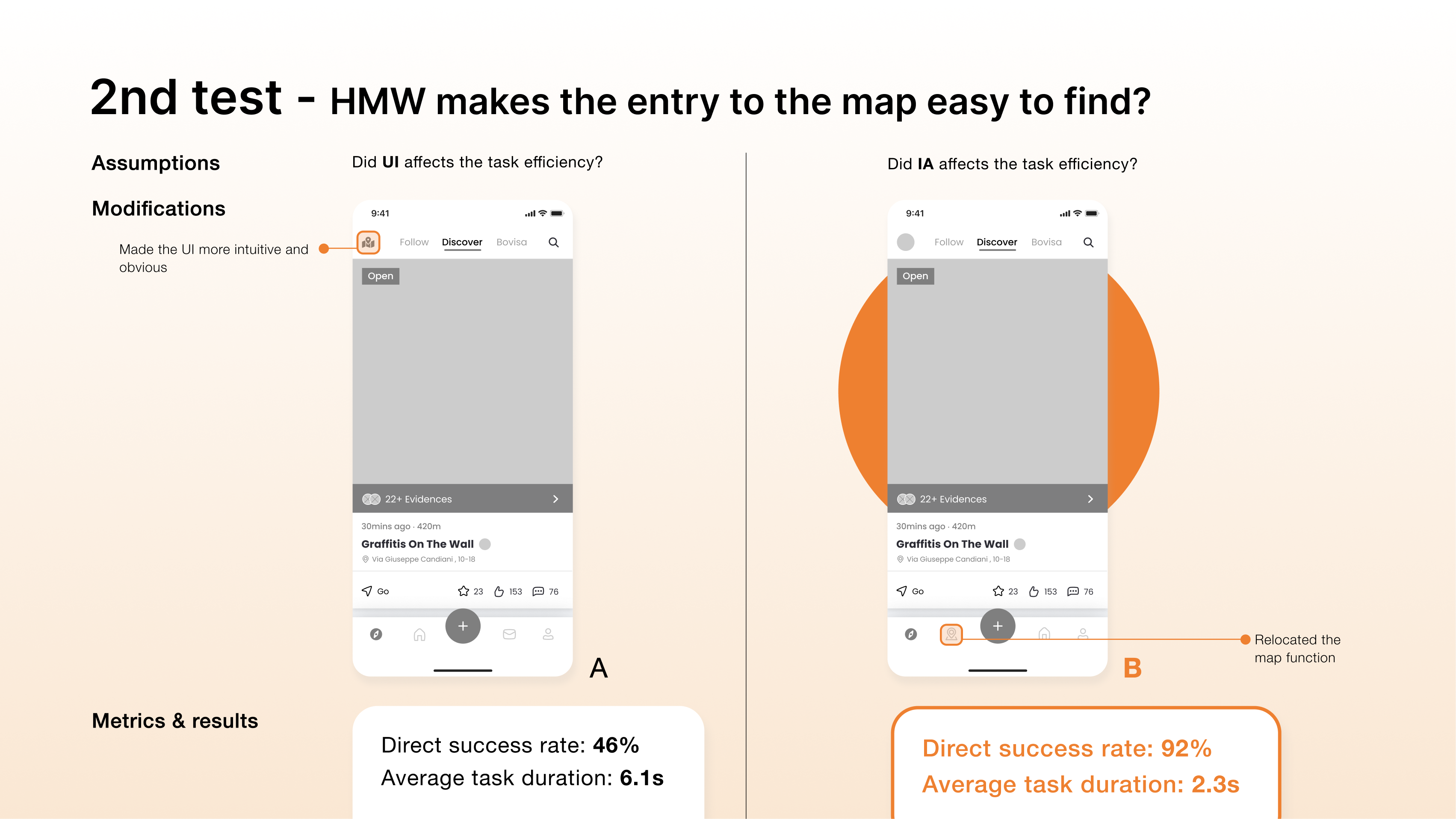
We began with rapid cognitive walkthroughs using think-aloud sessions to quickly identify usability issues. In the second round, we ran A/B tests with 10 classmates using Useberry to gather quantitative feedback and validate assumptions.
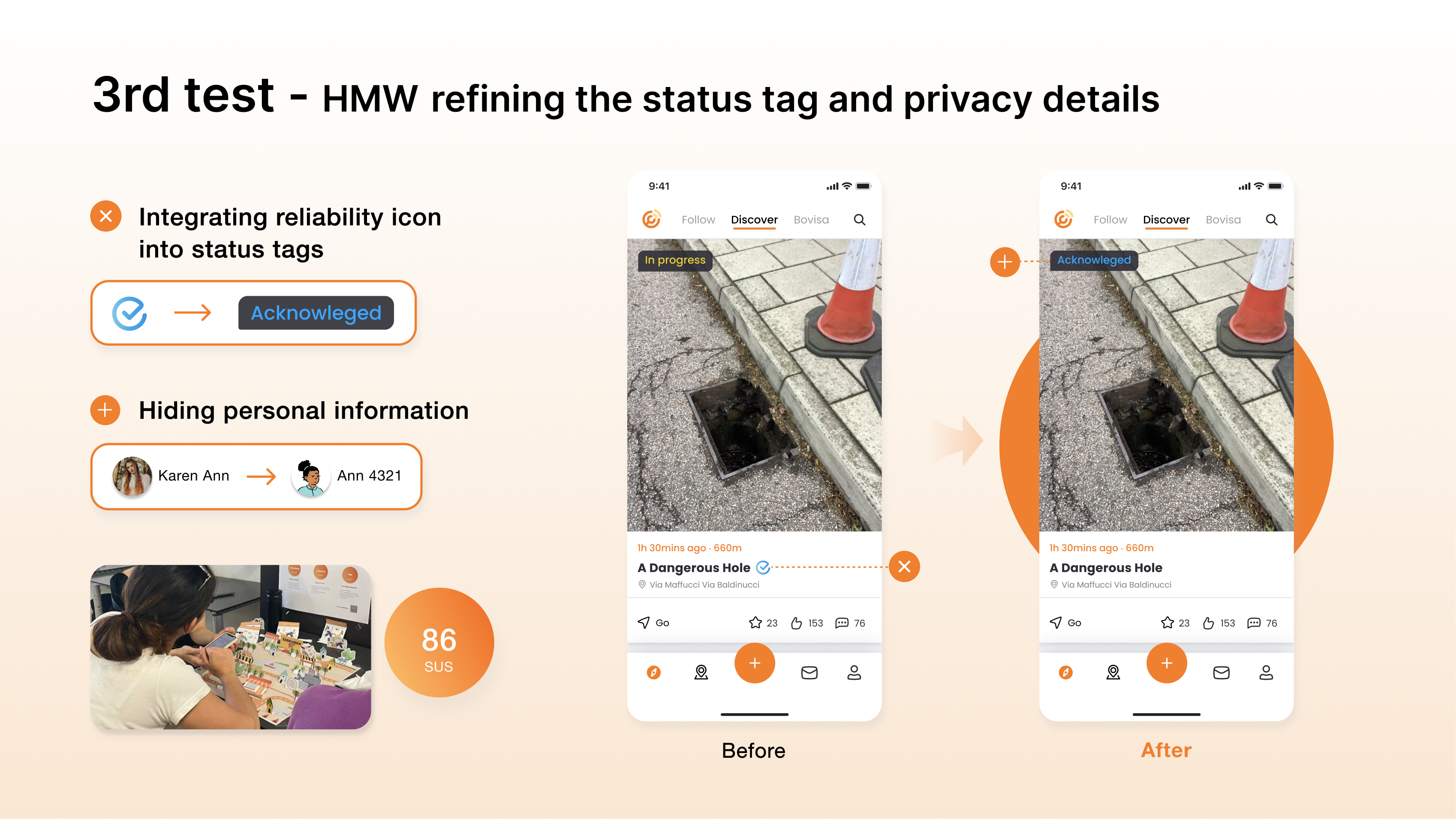
In the final round, we tested high-fidelity prototypes with classmates and clients. Insights from their feedback directly informed design refinements, resulting in a strong SUS score of 86/100.
04. Takeaways
1. Collaborating on a complex 0 ➞ 1 product: Working in a team taught me how to balance collaboration with ownership, especially when building a product from scratch under tight timelines.
2.Managing scope under constraints
I learned to prioritize features and maintain a flexible roadmap, ensuring meaningful progress within a limited time.
3.Testing to drive design decisions
Frequent user testing helped us ensure usability, while A/B testing provided evidence to support key design choices.